EAA2026

  • Symposium 01

    25 years of IASB: Past, present and future

    The IASB has been responsible for developing high-quality international financial reporting standards since 2001. Over the past 25 years, the geopolitical landscape has changed, and the standard-setting process itself has evolved. Therefore in 2026, it is a good moment to reflect on the IASB’s achievements, challenges, and future direction. This symposium will offer a timely and comprehensive assessment of the IASB’s first 25 years while exploring its future role in global accounting.

    We have assembled a distinguished panel to provide diverse perspectives: Kees Camfferman will examine the global reception of IFRS. Chris Nobes will evaluate the IASB’s contribution in terms of the content of the standards, reflecting on the extent to which IFRS improved the quality of reporting. Anne McGeachin (IASB Staff Member) and Florian Esterer (IASB Board Member) will discuss how the standard-setting process has developed over time and what lies ahead for the organization. In 2001, EFRAG was established as a key player in the endorsement process of IFRS for application in the EU. Saskia Slomp (EFRAG CEO) will reflect on the EU decision to adopt IFRS and on the development of the endorsement process.


    Moderator

    Christoph Pelger | University of Passau

    Panellists

    Kees Camfferman | Vrije Universiteit Amsterdam

    Florian Esterer | IASB Board Member

    Anne McGeachin | IASB Staff Member

    Chris Nobes | Royal Holloway, University of London

    Saskia Slomp | EFRAG CEO

    Schedule

    Date | Time: Wednesday 27 May 2026 15:00 – 16:30

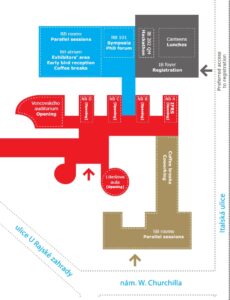
    Location: RB 101 (RajskĂĄ Building)

  • Symposium 02

    Who is interested in our research? The role of authors, reviewers, and editors in providing ‘relevant’ research

    Who is reading our research? Are our publications only targeting accounting academics, or are they also picked up beyond?

    This editors’ panel focuses on the relevance of accounting studies for practitioners and policymakers. While the themes of ‘relevance lost’ and ‘relevance regained’ has been on the radar of accounting researchers for decades (Drury, 1990; Roslender 1996, Holthausen & Watts 2001), the general impression in recent publications on the topic (Rajgopal, 2021; Burton et al. 2021) is not optimistic, and suggests that even today we hardly have impact outside of our own community. A number of colleagues have emphasized that it is hard for individual researchers to change this tendency, and that there is a need for structural support to make accounting research relevant (Leuz, 2018; Garcia Osma et al. 2023).

    We invite the editors to reflect on the necessity for accounting studies to contribute to practice, on the urgency for reviewers to more explicitly take such contributions into account, and on what authors can do to increase relevance.


    Moderator

    Martine Cools | KU Leuven

    Jochen Pierk | Erasmus Schoof of Economics

    Panellists

    Nadia Albu | Accounting in Europe

    Kris Hardies | Accounting Open

    Martin Jacob | The Accounting Review

    Matias Laine | European Accounting Review

    Schedule

    Date | Time: Wednesday 27 May 2026 17:00 – 18:30

    Location: RB 101 (RajskĂĄ Building)

  • Symposium 03

    Accounting Education at a Crossroads: Rethinking Purpose, Practice, and Pedagogy

    Internationally, accounting educators face persistent calls for reform. Across Europe, the UK, the US, and Australasia, scholars have argued that current programmes over emphasis technical accounting education which no longer meet the evolving needs of the accountancy profession (e.g., Bolt-Lee & Foster, 2003; Boyce et al., 2019; Carmona, 2013; Carnegie, 2022; Carnegie et al., 2024a; Chabrak & Craig, 2013; Diamond, 2005; Hopper, 2013; Pincus et al., 2017; Powell & McGuigan, 2023; Sorola & Drujon d’Astros, 2025).

    Building on international critiques and in the context of wider forces of digital transformation, sustainability imperatives, global risks, and eroding public trust, this symposium invites accounting educators to consider how our teaching and scholarship can better reflect accounting’s holistic purpose. We will consider how to embed technical competence, social responsiveness, and moral purpose into accounting education to meet the profession’s future needs. The symposium will also explore how accounting education can help renew the profession’s social contract by developing graduates who see accounting not only as reporting value but also as creating and protecting value for society and the natural environment, cultivating ethically grounded, socially responsive accountants for the future.

    Aim of the Symposium

    To provide a reflective and forward-looking platform for accounting educators, scholars, and professional accountancy bodies to discuss how the discipline can reclaim its foundational purpose in serving the public good.

    The symposium will:

    • Examine the role of educators in shaping citizen professionals who connect accounting practice with social responsibility.
    • Explore how accounting education can foster trust, transparency, and ethical accountability.
    • Provide practical and pedagogical examples illustrating how purpose-driven and public-interest thinking can be integrated into accounting education, drawing on multidimensional definitions of accounting (Carnegie et al., 2021; Carnegie et al., 2024b).

    Moderator

    Susan Smith | University College London

    Panellists

    Garry Carnegie | RMIT University

    Ericka Costa | University of Trento

    Adriana Tiron | Tudor Babes-Bolyai University

    Clive Webb | Head of Business Management, Policy and Insights, ACCA

    Schedule

    Date | Time: Thursday 28 May 2026 09:00 – 10:30

    Location: RB 101 (RajskĂĄ Building)

  • Symposium 04

    Accounting for intangibles, digital assets and innovation

    The rise of the knowledge economy has transformed business value creation, with intangible assets now representing as much as 90% of company value among leading firms. Intellectual property, workforce skills, brand reputation, and proprietary technologies drive innovation, market success, and sustainable growth in ways that far surpass traditional tangible assets like buildings or machinery. As business models become increasingly digital and reliant on non-physical resources, understanding and properly accounting for these intangibles—alongside new forms of digital assets such as cryptocurrencies and smart contracts—has become one of the most pressing challenges for accounting professionals, regulators, and researchers. This topic is gaining urgency as companies, investors, and regulators search for better ways to recognize, measure, and communicate the true drivers of value and risk in our evolving economy.

    This symposium will address some of the most urgent and complex topics facing the accounting profession today: how to recognize, measure, and report intangible assets and digital innovation—including intellectual property, workforce knowledge, brand, and the rapidly expanding realm of digital assets such as cryptocurrencies and decentralized finance (DeFi) platforms. The symposium will discuss recent research and developments in standard setting on accounting for innovation and intangible resources, including digital assets and blockchain technologies.

    Moderator

    Amir Amel-Zadeh | Said Business School, University of Oxford

    Panellists

    Seema Jamil-O’Neill | UK Endorsement Board

    Anne Jeny | IESEG School of Management

    Daniel Rabetti | National University of Singapore

    Yannis Tsalavoutas | University of Glasgow


    Schedule

    Date | Time: Thursday 28 May 2026 11:00 – 12:30

    Location: RB 101 (RajskĂĄ Building)

  • Symposium 06

    Building Trust in AI Through Assurance: Research Directions and Curriculum Implications for Accounting Graduates

    As organisations increasingly embed artificial intelligence (AI) into their operations, assurance over AI-related risks is becoming a critical—yet still underdeveloped—area in both internal and external auditing. Building users’ trust in AI systems is critical for successful adoption of AI by organisations. AI risks now include ethical, societal, and human rights impacts beyond traditional operational risks.

    As AI becomes increasingly integrated into organizational processes, internal auditors will be expected to provide assurance over a new set of complex risks. These include accountability for AI-generated outcomes, auditability of algorithms, data governance, cybersecurity, and the adequacy of human oversight, among others. External auditors increasingly rely on AI tools to enhance audit quality—through anomaly detection, predictive analytics, and automated testing—yet the assurance over these tools themselves remains limited. Standard setters and regulators are beginning to address the implications of AI for audit evidence, auditor judgment, and independence, but consensus is still forming.

    This panel will explore how the accounting profession needs to evolve to meet the challenges of AI assurance. Key themes include understanding the challenges better, the need for further and possibly interdisciplinary research, and the implications for accounting education. For example, are we equipping future auditors with the right mix of technical, ethical, and analytical skills? How can internal and external auditors collaborate to build trust in AI? And what role should the profession play in shaping assurance standards for AI?

    Moderator

    Sergeja Slapnicar | University of Queensland

    Panellists

    Mara Cameran | Bocconi University

    Marc Eulerich | University of Duisburg Essen

    Mukesh Garg | International association for accounting education and research

    Zuzana Hakova | IIA Czech Republic & UniCredit Bank Czech Republic and Slovakia

    Rui Peres Jorge | International Ethics Standards Board for Accountants

    Tomas Nemec | EY Partner in Assurance Department & Regional Leader for Innovations and Digitalization

    Schedule

    Date | Time: Thursday 28 May 2026 14:00 – 15:30

    Location: RB 101 (RajskĂĄ Building)


  • Symposium 08

    Can summarised corporate information help in solving financing issues of European SMEs?

    In 2024, the Eurogroup inclusive format (informal body of economic and finance ministers from EU member states) issued a statement that Europe is at risk of falling behind globally in competitiveness, growth, and prosperity. EU needs a capital market that can direct both domestic savings and foreign capital into innovative companies, enabling them to become engines of long-term growth and global leadership in new industries. The robust banking sector currently carries the bulk of financing needs for businesses, however, to meet substantial future financial needs, market-based funding opportunities must become more widely and readily available in Europe. Capital Markets Union (CMU) progress has been made, but the EU still lacks a deep and well-functioning market for risk capital, especially for start-ups and scale-ups. As a possible piece in the puzzle to solve the financing of start-ups and scale-ups, the European Commission has asked EFRAG to assess whether a voluntary template on key information of start-ups and scale-ups.

    At this symposium a panel will discuss whether publicly available key information of SMEs (including start-ups and scale-ups could help attracting finance) – and if so, what type of information is relevant to provide for start-ups and scale-ups in their different phases and what lessons can be learned from the development of the VSME standard (on voluntary sustainability information).

    Opening

    Saskia Slomp | EFRAG CEO

    Presentation

    Rasmus Sommer | EFRAG FR Associate Director

    Moderator

    Joachim Gassen | Humboldt University of Berlin

    Panellists

    Chiara Del Prete | EFRAG SR TEG Chair

    Martin FrĂœvaldskĂœ | CEO Warhorse Studios

    Valentina Guatri | Public Affairs/ESG Manager Invest Europe

    Schedule

    Date | Time: Friday 29 May 2026 11:00 – 12:30

    Location: RB 101 (RajskĂĄ Building)

  • Symposium 09

    Embedding Equity in the Age of Artificial Intelligence: How Accounting Creates Risks, Opportunities and New Research Agendas

    Across jurisdictions we see both progress and retreat on Diversity, Equity and Inclusion (DEI): initiatives are launched, rebadged, or quietly withdrawn, while inequalities in representation, progression and voice persist in the accounting academy and profession. This symposium asks what it means to embed equity in accounting in practice – specifically in the age of artificial intelligence (AI), and how accounting’s own tools can either reinforce or challenge inclusion. As AI becomes woven into daily accounting work, it creates new possibilities for fairness but also real risks of deepening inequalities, making equity impossible to ignore.

    Drawing on international research and practice, we explore the “bright and dark” sides of DEI. We consider how accounting systems structure incentives, shape narratives and define who counts, with attention to: equitable career pipelines; inclusive and exclusive effects of financial, sustainability, and narrative reporting; the role of standards; and how emerging AI-driven systems can both automate bias and open new avenues for research, management control systems, assurance and inclusive decision-making.

    The symposium combines short keynotes, a moderated panel discussion with leading voices and a highly interactive discussion to develop a forward-looking agenda for accounting research, education and practice. Participants will gain concrete examples, critical questions and innovative tools to reimagine how accounting can enable, rather than constrain, equity, and shape new research agendas with practical impact.

    Moderator

    Ekaete Efretuei | Liverpool John Moores University

    Panellists

    Tereza De Bardi | Partner at Deloitte Czechia

    Olga Rehorkova | Partner at PwC Czechia

    Timur Uman | Jönköping University

    Miklos Vasarhelyi | Rutgers University

    Schedule

    Date | Time: Friday 29 May 2026 14:00 – 15:30

    Location: RB 101 (RajskĂĄ Building)

  • Symposium 07

    The Future of EU Sustainability Reporting: CSRD, ESRS, the Omnibus Reforms and Global Developments

    The Corporate Sustainability Reporting Directive (CSRD), adopted by the European Union in 2022, marked a major step towards enhancing transparency, comparability, and accountability in corporate sustainability disclosures. The introduction of mandatory European Sustainability Reporting Standards (ESRS) and third-party assurance requirements represented a significant regulatory shift. However, the Omnibus process initiated in 2025 – aimed at simplifying EU rules, including the ESRS approved in 2023, and reducing the scope of companies affected – has introduced new uncertainties for preparers, assurance providers, and users of sustainability information. At the same time, the International Sustainability Standards Board has advanced its global baseline for sustainability disclosures, raising important questions about interoperability of standards and the potential role of “passporting” in reducing cross-jurisdictional fragmentation.

    In this symposium, panellists will discuss how companies are responding to the evolving CSRD regulatory landscape, particularly regarding the OMNIBUS process, and their interactions with the ISSB Standards and how shifting expectations are affecting internal processes, governance, and strategic decision-making. The session will consider the perspectives of EFRAG, ISSB, and preparers of sustainability reports. Together, these insights highlight the broader impact of these developments.


    Moderator

    Ronita Ram | University of Reading

    Panellists

    Richard Barker | University of Oxford and ISSB

    Alessandro Lai | University of Verona and SRC Chair

    Kerstin Lopatta | University of Hamburg and EFRAG SRB Chair

    Valerie Novotná | Head of Accounting & CSRD Lead at Česká spoƙitelna

    Frank Schiemann | Bamberg University

    Schedule

    Date | Time: Friday 29 May 2026 09:00 – 10:30

    Location: RB 101 (RajskĂĄ Building)


  • Symposium 05

    Changing Accounting Regulatory Paradigm in a Small Open Economy: A Case of The Czech Republic

    The Ministry of Finance of the Czech Republic has completed a major overhaul of the national accounting framework—the first comprehensive redesign since the early 1990s. While originally developed to support the country’s transition from a centrally planned to a market economy, the existing system no longer reflects the institutional, technological, and global integration features of today’s business environment. Among all, the new Act on Accounting will extend mandatory and voluntary application of IFRS as well as align Czech GAAP with IFRS for other entities, representing thus a fundamental shift toward more internationally comparable, investor-oriented reporting.

    This regulatory transformation offers a rare opportunity to examine how large-scale changes in accounting regulation affect financial reporting practices, audit processes, enforcement, and users’ decision-making. Of particular interest is the discontinuity in historical accounting data—a “break” in time series that raises conceptual and practical questions for analysts, auditors, regulators, and researchers relying on longitudinal information. At the same time, the reform provides a unique setting for empirical research, including changes in reporting quality, real effects of regulation, comparability, cost of capital implications, management incentives, and the interaction between financial reporting and taxation.

    This symposium brings together academics, regulators, and practitioners to discuss the theoretical, methodological, and empirical implications of this reform—not as a Czech-specific issue, but as a natural experiment that speaks to broader debates on accounting harmonisation, regulatory design in emerging economies, and the evolution of financial reporting in an era of rapid digital transformation.

    Moderator

    Catalin Albu | Bucharest University of Economic Studies

    Panellists

    Zbyněk Halíƙ | Head of Financial Statements and External Reporting at Ơkoda Auto

    Petr Koblic | CEO of the Prague Stock Exchange

    Jiƙí Pelák | Prague University of Economics and Business & The Ministry of Finance

    Katherine Schipper | Duke University

    Petr VĂĄcha | The Chamber of the Auditors of the Czech Republic & Head of Assurance at EY


    Schedule

    Date | Time: Thursday 28 May 2026 14:00 – 15:30

    Location: RB 101 (RajskĂĄ Building)

    Symposium sponsor